

Type at least 2 characters for suggestions, or press Enter for the full search.
For many years, Khader Al-Zagharneh, a farmer from the Bedouin community of Al-Ramadin in the southernmost part of the West Bank, struggled with chronic water shortages and frequent service interruptions. The lack of reliable access to water caused significant losses to his crops and forced him to spend substantial amounts of money purchasing water to meet his family's daily needs.
After years of appeals from the local community, a sustainable solution was finally realized through the Area C Development Programme – Package V, implemented by the Municipal Development and Lending Fund (MDLF) with funding from the European Union and the Government of Denmark. The programme had a total budget of €5.8 million.
The programme financed 16 development projects across 15 Palestinian communities in the governorates of Jerusalem, Hebron, Bethlehem, Qalqilya, Tulkarm, and Jenin. The projects focused on improving essential infrastructure, including water supply systems, wastewater networks, roads, electricity, educational facilities, and public buildings.
Priority was given to communities that had not previously benefited from earlier funding packages, based on objective selection criteria aimed at improving living conditions in Area C while ensuring equitable geographic coverage.
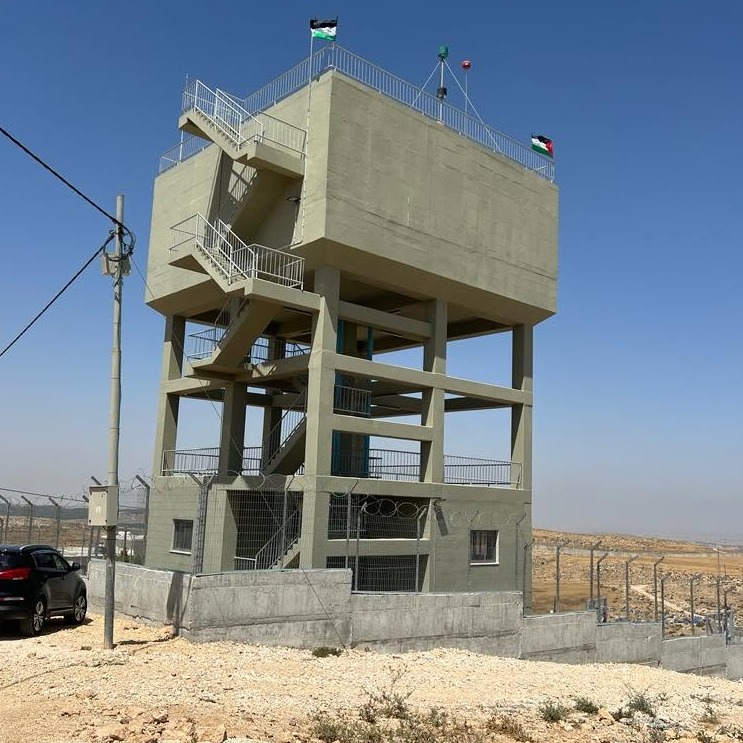
As part of the programme, Al-Ramadin received a strategic water infrastructure project that included the construction of an elevated 500-cubic-meter water reservoir and a 1,000-meter transmission pipeline, with a total investment of €510,000.
According to Eng. Akram Al-Talahmeh, Projects Engineer at Al-Ramadin Municipality, the project has transformed water service in the community.
"The new reservoir has effectively eliminated the recurring water shortages that residents suffered for many years. Today, it provides reliable drinking water to nearly 6,000 residents living within the municipality's master plan area."
He also emphasized that the project has significantly reduced citizens' complaints while ensuring access to one of the most fundamental human needs—safe drinking water—particularly in light of population growth and the scarcity of groundwater resources.
For farmer Khader Al-Zagharneh, the impact has been equally significant.
"Reliable access to water has enabled me to expand my livestock, which is the primary source of income for many families in Al-Ramadin. Agriculture has also improved considerably because crops now receive sufficient irrigation."
According to municipal data, approximately 70 percent of Al-Ramadin's residents depend on livestock production as their main livelihood.
Al-Zagharneh also noted that improved water availability has increased agricultural productivity and enhanced the health of his trees and crops.
"Water is the foundation of life. Today we can clearly see the difference in our land and our harvest."
Residents across Al-Ramadin have experienced a noticeable improvement in their daily lives since the completion of the reservoir. Reliable water supply has enhanced household stability, supported agricultural activities, and improved overall living conditions.
Complementing the infrastructure investment, MDLF launched the "Every Drop Counts" awareness campaign in Al-Ramadin to promote water conservation and sustainable water use. The campaign engaged school students, municipal council members, community leaders, and local residents in activities aimed at encouraging responsible water consumption and protecting this vital natural resource.
Today, the Al-Ramadin water project stands as a powerful example of how targeted infrastructure investments can strengthen community resilience, improve essential services, and enhance the quality of life in some of Palestine's most vulnerable communities.